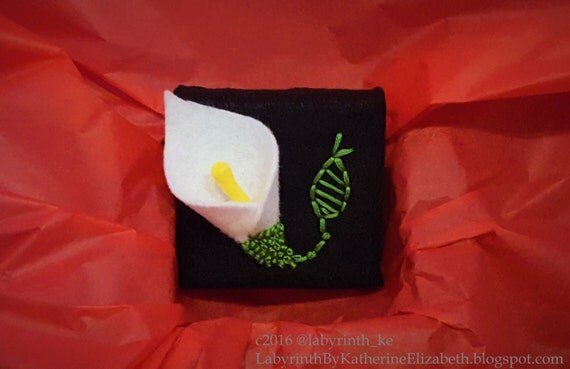
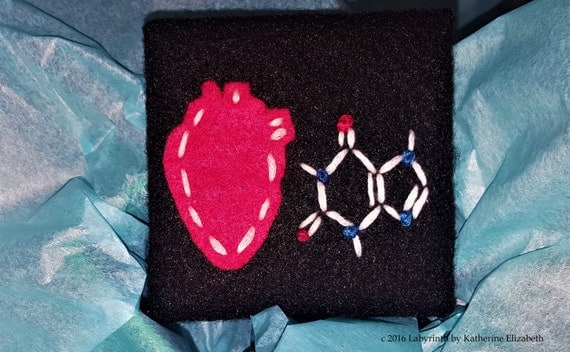
"What is art?" This is a big question surrounding fiber arts and other media associated with handicraft.
 |
| Crazy Quilt c.1900 (Antiques Roadshow) |
Quilting, embroidery, needlework, china painting, and sewing ("women's work" in the modern western tradition) are often not deemed artistic equivalents to the grand mediums of painting and sculpture. This women's creativity is labor-intensive yet devalued as domestic and feminine, where it becomes invisible and described as non-productive.
After the industrial revolution, women started to sew less because it became more affordable to purchase well-made clothing from stores. Enter retail message strategy: sewing makes you feminine and graceful. An attractive thrifty wife and good mother sews.
Fiber art did take a feminist turn during the Suffrage Movement where women were making embroidered banners for their protests. The term "fiber art" came into use by curators and art historians to describe the work of the artist-craftsman following World War II, with a sharp increase in the design and production of "art fabric." In the 1950s, as the contributions of craft artists became more recognized—not just in fiber but in clay and other media—an increasing number of weavers began binding fibers into nonfunctional forms as works of art.
The 1960s and 70s brought an international revolution in fiber art. Beyond weaving, fiber structures were created through knotting, twining, plaiting, coiling, pleating, lashing, and interlacing. The women's movement was important in contributing to the rise of fiber art because of the traditional association of women with textiles in the domestic sphere. Many of the most prominent fiber artists are women, and they sought to elevate “women’s craft” to the level of “high art,” and away from its derogatory designation as “low art” or “kitsch.” As Lucy Lippard explained in her 1973 essay, “Household Images in Art,” previously women artists had avoided “‘Female techniques’ like sewing, weaving, knitting, ceramics, even the use of pastel colors (pink!) and delicate lines—all natural elements of artmaking,” for fear of being labeled “feminine artists.” The Women’s Movement changed that, she argued, and gave women the confidence to begin “shedding their shackles, proudly untying the apron strings—and, in some cases, keeping the apron on, flaunting it, turning it into art.”
 |
| by Michelle Kingdom |
Since the 1980s, fiber work influenced by postmodernist ideas has become more and more conceptual. In addition to long-standing experimentation with materials and techniques, this brought a new focus on creating work which confronted cultural issues such as: gender feminism; domesticity and the repetitive tasks related to women's work; politics; the social and behavioral sciences; material specific concepts, etc.
 |
| by Laura Bowman |
The Subversive Stitch feminist by art historian Rozsika Parker and exhibits which incorporated two shows called 'Embroidery in Women's Lives 1300-1900' and 'Women in Textiles Today' were influential on public opinions about fiber art forms. Most historical studies of embroidery had concentrated on questions of style and technique. These exhibitions tracked the idea of femininity that was forced upon women through embroidery from medieval times, when it was considered a high art form practiced by both men and women, to its current denotation as a 'feminine craft'. Adding names and dates to the creation of the objects thrust them into the fine art world again.
Felt 1: History
Felt 2: Adult Felt and Fibers